
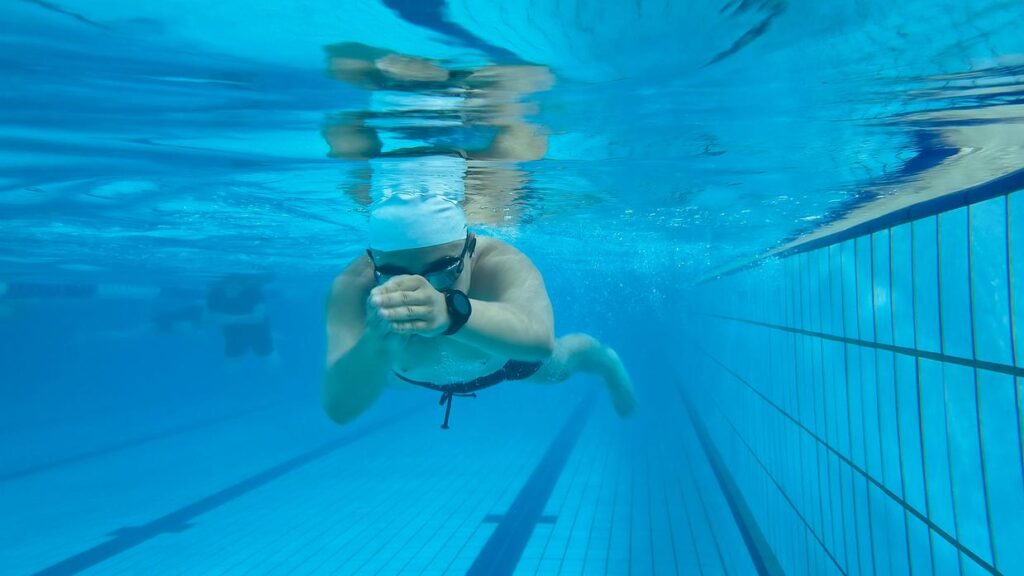
If you want to build strength without putting stress on your joints, water resistance training offers a powerful, low-impact solution. This guide shows you how to turn the natural drag of water into an effective full-body workout that improves strength, endurance, and stability—without the strain of traditional weightlifting. Many people avoid strength training because it feels intimidating or aggravates old injuries. Aquatic resistance work removes those barriers while still delivering measurable results. Drawing on proven principles from strength conditioning and biomechanics, you’ll learn the science behind water resistance, the most effective exercises, and how to progress safely and confidently in the pool.
Why Water is Your Ultimate Training Partner: The Science of Aquatic Resistance
Incorporating water resistance training into your routine can significantly enhance your strength and recovery, especially when paired with the right pre-workout and post-workout meals to fuel your body effectively – for more details, check out our Pre-Workout and Post-Workout Meals: What to Eat and Why.
If you want a workout that builds strength and protects your body, water delivers immediate advantages.
Buoyancy—the upward force water exerts—can reduce weight-bearing stress by up to 90% when you’re submerged to chest level (American Council on Exercise). That means less strain on joints, tendons, and bones. For anyone managing arthritis or recovering from injury, this translates to moving with confidence instead of caution (and fewer post-workout ice packs).
Viscosity and drag explain why movements feel harder in the pool. Water is about 800 times denser than air (U.S. Geological Survey), creating constant, multi-directional resistance. Every push and pull triggers both concentric (muscle shortening) and eccentric (muscle lengthening) contractions, recruiting more muscle fibers. The benefit? Efficient strength gains without heavy loads.
Hydrostatic pressure—the force water applies to your body—acts like a natural compression sleeve, improving circulation and helping reduce swelling. Better blood flow supports cardiovascular efficiency and recovery.
Thermoregulation is the quiet hero. Water dissipates heat faster than air (National Institutes of Health), helping you train longer with lower perceived exertion.
- Lower impact, higher output
- Built-in resistance from every angle
- Faster recovery between sessions
That’s the measurable upside of water resistance training: smarter effort, stronger results.
Gearing Up: Essential Equipment for Aquatic Strength Conditioning

First, remember this: you may not need any equipment at all. Your body plus the pool’s natural drag can deliver a serious challenge. Simply cup your hands or spread your fingers to adjust intensity instantly (yes, it’s that simple). For beginners, I recommend mastering these basics before adding gear.
Next, consider foam dumbbells or barbells. Because they float, you must press them downward, forcing your shoulders, chest, and back to engage continuously. This makes them ideal for controlled upper-body work in water resistance training.
If you’re ready to level up, try webbed gloves or paddles. By increasing surface area, they create more drag during chest presses and rows. Start with short intervals to avoid shoulder fatigue.
Meanwhile, ankle fins or cuffs target the lower body. They amplify resistance during kicks, hamstring curls, and hip abductions.
For structured programming ideas, explore pool based hiit workouts to build endurance with low impact. Choose equipment based on your goals—and progress gradually.
The Complete Full-Body Aquatic Resistance Workout
Warm-Up (5 minutes)
Start with gentle movements to wake up your muscles and joints. Walk across the shallow end, swing into high knees, and add controlled arm circles. The goal isn’t speed; it’s circulation and mobility. I once rushed this phase and jumped straight into harder sets (big mistake). My shoulders felt stiff halfway through, and my power dropped. Ever since, I treat warm-ups as non-negotiable prep time, not filler.
Upper Body Circuit (3 sets of 12–15 reps)
Water Chest Press
Stand in chest-deep water with hands at chest level, palms facing out. Push forward against the water, then slowly return to start. The resistance increases with speed, which means control matters. Foam dumbbells add intensity by increasing surface area (the more drag, the tougher the push). Early on, I locked my elbows at full extension and felt joint strain. Lesson learned: keep a soft bend to protect your joints and maintain tension.
Aquatic Bicep Curls
With arms at your sides and palms forward, curl your forearms toward the surface. Webbed gloves amplify resistance by catching more water. I used to swing my arms to power through reps—momentum over muscle. Slowing down improved activation and reduced fatigue. Smooth and steady wins here.
Lower Body Circuit (3 sets of 12–15 reps per leg)
Deep Water Lunges
In waist-to-chest deep water, step forward into an exaggerated lunge. Lower your hips while keeping your torso upright. The pool stabilizes you, but it also exposes poor balance. I used to lean forward, thinking it helped drive up. Instead, it overloaded my knees. Staying tall shifted the effort into my glutes and made each rep stronger.
Hamstring Curls
Hold the pool wall for balance. Bend one knee, drawing your heel toward your glute against the water’s pull. Ankle cuffs increase drag for added challenge. At first, I rushed the return phase. Slowing the descent doubled the burn (in a good way).
Core Engagement
Otter Roll
In deep water, hug your knees to your chest and rotate 360 degrees, controlling the spin with your core. This move looks playful—almost like something from a summer camp movie—but it demands focus. During my first attempt at water resistance training, I flailed instead of braced. The fix? Tighten your core before initiating rotation. Control creates strength; chaos wastes energy.
Technique and Progression: Maximizing Your Gains in the Water
Speed is key: the faster you move, the greater the resistance, turning simple drills into scalable strength work. Increase tempo while preserving flawless form to amplify intensity without equipment. Expand surface area by spreading fingers or adding paddles, then extend limbs fully to lengthen the lever and spike demand. Most programs ignore lever physics and drag manipulation; mastering both gives you an edge competitors rarely teach. In water resistance training, hydration remains critical because sweat loss still occurs. Track tempo intervals and perceived exertion to quantify progress objectively. Consistency compounds results.
Integrating Aquatic Strength Into Your Fitness Routine
You set out to find a smarter way to build strength without punishing your joints—and now you have it. By harnessing buoyancy, viscosity, and hydrostatic pressure, water resistance training delivers powerful muscle engagement without the wear and tear of high-impact routines. If aches, plateaus, or recovery struggles have been holding you back, this approach directly addresses those pain points while supporting long-term performance.
The next step is simple: add one or two aquatic sessions to your week and experience the difference firsthand. Commit to consistency, track your progress, and feel how quickly your strength, stability, and recovery improve.
 Ask Mirethia Droshar how they got into hydo strength conditioning techniques and you'll probably get a longer answer than you expected. The short version: Mirethia started doing it, got genuinely hooked, and at some point realized they had accumulated enough hard-won knowledge that it would be a waste not to share it. So they started writing.
What makes Mirethia worth reading is that they skips the obvious stuff. Nobody needs another surface-level take on Hydo Strength Conditioning Techniques, Daily Health Routine Tips, Fitness Foundations and Essentials. What readers actually want is the nuance — the part that only becomes clear after you've made a few mistakes and figured out why. That's the territory Mirethia operates in. The writing is direct, occasionally blunt, and always built around what's actually true rather than what sounds good in an article. They has little patience for filler, which means they's pieces tend to be denser with real information than the average post on the same subject.
Mirethia doesn't write to impress anyone. They writes because they has things to say that they genuinely thinks people should hear. That motivation — basic as it sounds — produces something noticeably different from content written for clicks or word count. Readers pick up on it. The comments on Mirethia's work tend to reflect that.
Ask Mirethia Droshar how they got into hydo strength conditioning techniques and you'll probably get a longer answer than you expected. The short version: Mirethia started doing it, got genuinely hooked, and at some point realized they had accumulated enough hard-won knowledge that it would be a waste not to share it. So they started writing.
What makes Mirethia worth reading is that they skips the obvious stuff. Nobody needs another surface-level take on Hydo Strength Conditioning Techniques, Daily Health Routine Tips, Fitness Foundations and Essentials. What readers actually want is the nuance — the part that only becomes clear after you've made a few mistakes and figured out why. That's the territory Mirethia operates in. The writing is direct, occasionally blunt, and always built around what's actually true rather than what sounds good in an article. They has little patience for filler, which means they's pieces tend to be denser with real information than the average post on the same subject.
Mirethia doesn't write to impress anyone. They writes because they has things to say that they genuinely thinks people should hear. That motivation — basic as it sounds — produces something noticeably different from content written for clicks or word count. Readers pick up on it. The comments on Mirethia's work tend to reflect that.