

If you’re ready to stop starting over and finally build momentum, this guide will show you how to create a structured, sustainable approach to training. Many routines fail because they’re random, overly intense, or disconnected from real goals—leading to burnout and inconsistent results. Here, you’ll learn a practical framework for weekly workout plan design that balances strength, recovery, and energy management. Based on proven strength conditioning principles and sustainable fitness strategies, this step-by-step blueprint will help you structure your week, choose the right exercises, and build a plan you can stick to long term.
An unbeatable fitness plan isn’t random—it’s structured around five proven pillars that deliver measurable results.
1. Strength Training
Strength training builds lean muscle, increases resting metabolism (the calories you burn at rest), and improves bone density, reducing fracture risk (Harvard Health). Using progressive overload—gradually increasing weight or reps—ensures continual adaptation. The benefit? More strength, better posture, and a body that burns more energy even off the clock.
2. Cardiovascular Health
Cardio improves heart efficiency, lung capacity, and stamina. According to the American Heart Association, 150 minutes of moderate cardio weekly supports long-term heart health. That doesn’t mean endless treadmill sessions; interval cycling, rowing, or brisk walking all count (yes, even dancing like you’re in a training montage).
3. Mobility & Flexibility
Mobility training enhances joint range of motion, while flexibility lengthens muscles. Together, they reduce injury risk and improve movement quality. Dynamic warmups before lifting are a pro tip for safer, stronger sessions.
4. Active Recovery
Active recovery means low-intensity movement—like walking or light yoga—that promotes circulation without strain. Recovery accelerates muscle repair and reduces soreness.
5. Consistency
A smart weekly workout plan design balances intensity and rest. Consistency compounds results over time—because showing up beats perfection, every time.
How to Structure Your Workout Week: 3 Proven Splits
Designing your weekly workout plan design starts with one key question: How many days can you realistically train? From there, the right split becomes clearer.
3-Day Full-Body Split vs. 4-Day Upper/Lower
If you’re short on time, the 3-day full-body split is hard to beat. You train all major muscle groups—chest, back, legs, shoulders—each session. That means higher frequency (how often you train a muscle per week), which research shows supports muscle growth when total volume is appropriate (Schoenfeld, 2016). In practical terms, Monday, Wednesday, and Friday can cover everything efficiently.
By contrast, the 4-day upper/lower split separates upper- and lower-body sessions. This allows more volume (total sets and reps per muscle group) per workout. So instead of squeezing squats and shoulder presses into one day, you can focus. Think: Upper (Mon), Lower (Tue), Rest (Wed), Upper (Thu), Lower (Fri). It’s a sweet spot for intermediates who want progress without living at the gym.
5-Day Push/Pull/Legs (PPL) vs. Everything Else
The 5-day PPL split organizes workouts by movement patterns: push (chest, shoulders, triceps), pull (back, biceps), and legs. Compared to full-body training, PPL offers more specialization and recovery per muscle group. However, it demands consistency. Miss a day, and the rhythm breaks (like skipping leg day in a Rocky training montage—noticeable).
Integrating Cardio & Mobility
Cardio fits best after strength training or on separate days to avoid fatigue interference (ACSM, 2022). Meanwhile, dedicated flexibility work improves range of motion—but remember the difference explained in mobility vs flexibility whats the difference and why it matters. Pro tip: keep intense cardio 24 hours away from heavy leg sessions to protect recovery.
Ultimately, the “best” split isn’t universal—it’s the one you can sustain.
Choosing the Right Exercises for Maximum Impact
“Am I doing the right exercises?” a client once asked me. It’s a fair question. After all, more movements don’t always mean better results. In fact, the 80/20 Rule suggests the opposite: spend 80% of your effort on compound exercises—multi-joint movements like squats, deadlifts, bench presses, overhead presses, and rows that train several muscle groups at once. The American Council on Exercise notes compound lifts burn more calories and build more overall strength because they recruit more muscle mass.
However, some argue isolation work deserves equal attention. “Don’t I need curls for bigger arms?” another trainee insisted. Yes—but strategically. Use the remaining 20% for isolation exercises like bicep curls or leg extensions to fill specific gaps.
Then there’s progressive overload—gradually increasing weight, reps, or intensity to force adaptation. As strength coach Mark Rippetoe puts it, “Strong people are harder to kill than weak people.” In other words, progression drives results.
For practical application, consider this simple split within your weekly workout plan design:
- Push: Bench press, overhead press
- Pull: Barbell rows, deadlifts
- Legs: Back squats, Romanian deadlifts
Start big. Add detail later. That’s how impact compounds.
Simple Nutrition Strategies to Fuel Your Fitness
First, let’s talk pre-workout fuel. About 60–90 minutes before training, eat complex carbohydrates—slow-digesting carbs that provide steady energy—plus a small amount of protein. For example, oatmeal with Greek yogurt or whole-grain toast with eggs keeps blood sugar stable and muscles primed. This combination supports endurance and delays fatigue (Academy of Nutrition and Dietetics).
Next, prioritize post-workout recovery. Within two hours, consume high-quality protein to repair muscle fibers—the tiny strands stressed during exercise. Research shows 20–40 grams of protein optimizes muscle protein synthesis (JISSN, 2017). A shake, chicken bowl, or tofu stir-fry works well.
Meanwhile, treat hydration as a performance tool. Even 2% dehydration can reduce strength and focus (ACSM). Drink consistently before, during, and after workouts.
Finally, if you change one thing, add lean protein to every meal. It’s the simplest upgrade to support consistency, recovery, and your weekly workout plan design.
Putting Your Plan into Action This Week
You now have the pillars, the splits, and the core principles to eliminate workout confusion for good. The overwhelm you felt before? That came from having no structure. With a clear weekly workout plan design, you replace guesswork with direction and turn hesitation into momentum.
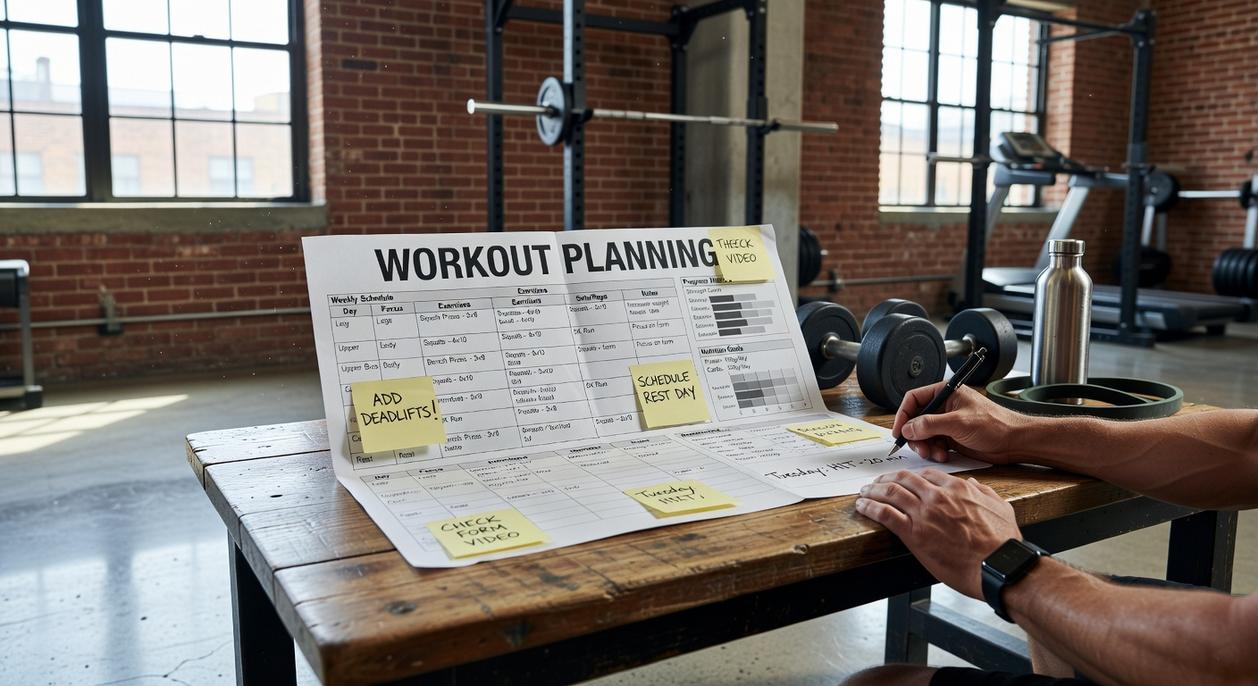
The key is simple: start small. Choose one split. Pencil in your sessions for the next seven days. Focus only on completing Week 1. Progress—not perfection—is the goal.
If you’re tired of spinning your wheels and not seeing results, this is your moment. Commit to your plan today and follow it through. Build consistency now, and the strength, energy, and confidence will follow.
 James Mathisagary has opinions about daily health routine tips. Informed ones, backed by real experience — but opinions nonetheless, and they doesn't try to disguise them as neutral observation. They thinks a lot of what gets written about Daily Health Routine Tips, Fitness Foundations and Essentials, Hydo Strength Conditioning Techniques is either too cautious to be useful or too confident to be credible, and they's work tends to sit deliberately in the space between those two failure modes.
Reading James's pieces, you get the sense of someone who has thought about this stuff seriously and arrived at actual conclusions — not just collected a range of perspectives and declined to pick one. That can be uncomfortable when they lands on something you disagree with. It's also why the writing is worth engaging with. James isn't interested in telling people what they want to hear. They is interested in telling them what they actually thinks, with enough reasoning behind it that you can push back if you want to. That kind of intellectual honesty is rarer than it should be.
What James is best at is the moment when a familiar topic reveals something unexpected — when the conventional wisdom turns out to be slightly off, or when a small shift in framing changes everything. They finds those moments consistently, which is why they's work tends to generate real discussion rather than just passive agreement.
James Mathisagary has opinions about daily health routine tips. Informed ones, backed by real experience — but opinions nonetheless, and they doesn't try to disguise them as neutral observation. They thinks a lot of what gets written about Daily Health Routine Tips, Fitness Foundations and Essentials, Hydo Strength Conditioning Techniques is either too cautious to be useful or too confident to be credible, and they's work tends to sit deliberately in the space between those two failure modes.
Reading James's pieces, you get the sense of someone who has thought about this stuff seriously and arrived at actual conclusions — not just collected a range of perspectives and declined to pick one. That can be uncomfortable when they lands on something you disagree with. It's also why the writing is worth engaging with. James isn't interested in telling people what they want to hear. They is interested in telling them what they actually thinks, with enough reasoning behind it that you can push back if you want to. That kind of intellectual honesty is rarer than it should be.
What James is best at is the moment when a familiar topic reveals something unexpected — when the conventional wisdom turns out to be slightly off, or when a small shift in framing changes everything. They finds those moments consistently, which is why they's work tends to generate real discussion rather than just passive agreement.