If you’re serious about building strength, improving endurance, and transforming your body, you need more than random workouts and trendy diet advice. You need a foundation rooted in proven training principles, smart nutrition strategies, and sustainable daily habits. This article is designed to give you exactly that.
Many people hit frustrating plateaus because they overlook the fundamentals—proper form, recovery, nutrient timing, and the progressive overload principle that drives real, measurable gains. Without a structured approach, it’s easy to waste months putting in effort without seeing meaningful results.
We’ve grounded this guide in established exercise science, peer-reviewed nutrition research, and insights commonly used by certified strength and conditioning professionals. Every recommendation focuses on practical application, so you can confidently implement what you learn.
Inside, you’ll discover how to build a strong fitness base, fuel your body for consistent energy, apply smarter strength techniques, and develop daily habits that support long-term health and performance.
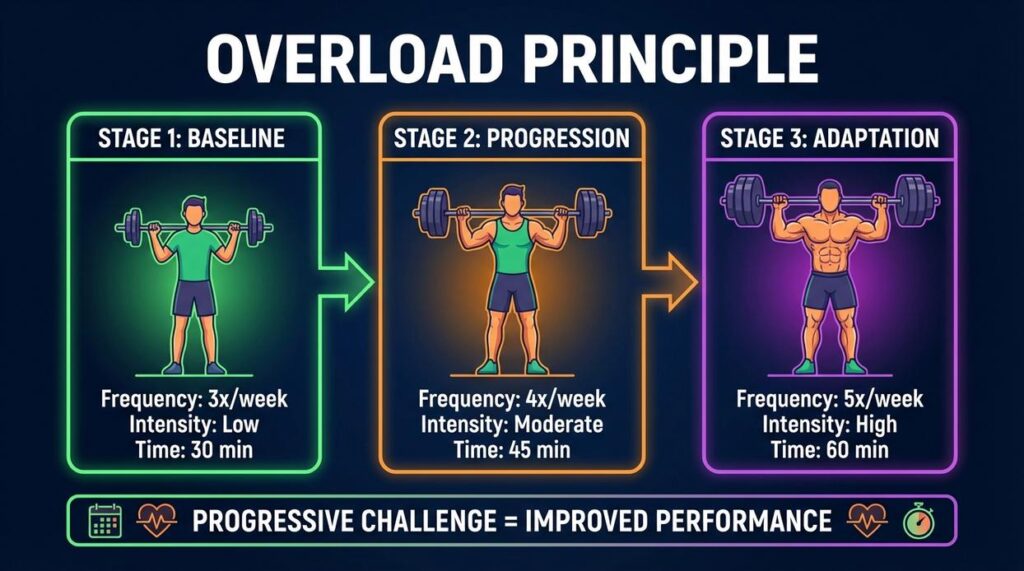
Hitting a workout plateau is frustrating. You lift the same weight, for the same reps, week after week—and nothing changes. That happens because your body adapts, meaning it becomes efficient at a repeated demand. To grow, you must apply the progressive overload principle. In simple terms, you gradually increase the challenge so muscles are forced to respond.
Here’s what that looks like:
- Add more weight
- Increase reps
- Slow the tempo
- Reduce rest time
In other words, give your body a new reason to grow (it loves efficiency, not comfort). Done consistently, progress follows. Every session counts.
Understanding the Science of Muscle Growth
Muscle growth isn’t magic—it’s biology. At the center of it is the progressive overload principle: The principle of continually and systematically increasing the demands placed on your muscles to stimulate growth in size, strength, and endurance. In simple terms, if you keep lifting the same weight for the same reps, your body has no reason to change.
So what’s happening under the hood? When you lift weights, you create microscopic tears in your muscle fibers. This sounds alarming, but it’s a good thing. During recovery, your body repairs those fibers and reinforces them to better handle future stress (think of it as your muscles upgrading their software). Over time, that repair process increases size and strength—a process known as hypertrophy, or muscle enlargement.
However, without increasing the stimulus—more weight, more reps, or more tension—you’ll hit a plateau. It’s similar to building a callus: skin thickens only with repeated, increasing friction. Muscles adapt the same way.
Some argue soreness alone equals growth. Not quite. Soreness is a side effect, not the goal. Pro tip: track weights and reps weekly to ensure steady progression. Consistency, not random intensity, drives real results.
The 4 Pillars of Progressive Overload

I used to think getting stronger meant just lifting heavier every week. That worked—until it didn’t. Plateaus, sore joints, stalled progress. The lesson? Growth isn’t random. It’s built on four clear pillars.
Pillar 1: Increase Resistance (Weight/Intensity)
This is the most obvious method. Once you can comfortably hit your target reps, add a small increment—usually 2.5–5 lbs. These micro-jumps compound over time (and save your ego from writing checks your body can’t cash). Research shows gradual load increases drive strength gains by continually challenging muscle fibers (American College of Sports Medicine, 2009).
My mistake: I added too much weight too soon and sacrificed form. Small jumps win.
Pillar 2: Increase Volume (Reps & Sets)
If you can’t add weight, add work. Move from 8 reps to 10 with the same load. Or increase from 3 sets to 4. This raises total training volume—the total amount of work performed—a key driver of hypertrophy (Schoenfeld, 2010).
I once chased heavier lifts while ignoring volume. Turns out, muscles care about total stimulus, not bragging rights.
Pillar 3: Increase Frequency
Training a muscle group more often—say, two leg days instead of one—boosts weekly volume and reinforces skill. Studies suggest training muscles at least twice per week improves growth compared to once weekly splits (Schoenfeld et al., 2016).
Pro tip: Spread volume across sessions to reduce fatigue and maintain quality reps.
Pillar 4: Decrease Rest Time
Shortening rest periods increases workout density—more work in less time. This elevates metabolic stress, which supports hypertrophy and muscular endurance. I learned the hard way that scrolling between sets kills momentum (and results).
The progressive overload principle ties these pillars together: consistently increase the demand placed on your body. Neglect recovery or movement quality, though, and you’ll stall. If you’re unsure where movement quality fits in, read mobility vs flexibility whats the difference and why it matters: https://cotaldihydo.com/mobility-vs-flexibility-whats-the-difference-and-why-it-matters/.
Progress isn’t flashy. It’s layered, intentional, and built one smart adjustment at a time.
Your Blueprint for Consistent Gains
If you’re not tracking your workouts, you’re guessing. And guessing doesn’t build muscle, strength, or confidence. A simple notebook or app where you log exercises, weight, sets, and reps is non-negotiable. Why? Because what gets measured improves. When you can see last week’s numbers, you know exactly what you need to beat this week (and yes, that little win feels good).
More importantly, tracking ensures you’re applying the progressive overload principle—the idea that your body only adapts when it’s challenged with slightly more than it handled before. Without proof of progression, you’re just repeating workouts.
One of the simplest ways to guarantee progress is the Double Progression model.
Step 1: Pick a target rep range, like 8–12 reps.
Step 2: Choose a weight you can lift for 8 reps with perfect form.
Step 3: In future sessions, keep the same weight and add reps until you can complete 3–4 sets of 12.
Step 4: Once you hit 12 reps across your sets, increase the weight by the smallest increment and drop back to 8 reps. Then repeat.
That’s it. Simple. Repeatable. Effective.
The benefit? Clear direction every workout. No second-guessing. No wasted sessions. Over time, those small jumps compound into noticeable strength gains, better muscle definition, and measurable confidence.
Pro tip: micro-plates (1–2 lb increases) help you progress longer without stalling.
Consistency isn’t magic. It’s math. And now you have the formula.
Smart progression beats ego lifting every time. Adding weight too fast—often called ego lifting—sacrifices form and invites injury. Instead, follow the progressive overload principle with patience. Muscle actually grows during recovery, not workouts, so prioritize 7-9 hours of sleep and protein-rich meals to repair tissue (yes, Netflix can wait). Ask yourself: is one reckless PR worth weeks off?
- Increase load gradually while maintaining perfect form.
- Schedule a deload week—a planned reduction in intensity—to reset your nervous system and prevent overtraining.
- Track soreness, energy, and mood.
Pro tip: when performance dips, rest harder, not longer. Stay consistent daily.
Strength is built gradually, not overnight. The real key is consistent, tracked increases in effort—the progressive overload principle in action. So next workout, add five pounds, one rep, or one extra set. Then record it. Over time, this simple habit removes guesswork and puts you fully in control of results.
Build Strength That Lasts
You started this guide to understand how to build real strength, boost energy, and create a fitness routine that actually works. Now you know that lasting progress comes from smart nutrition, intentional recovery, and applying the progressive overload principle consistently over time.
The truth is, spinning your wheels with random workouts and inconsistent habits is frustrating. Lack of results kills motivation. But when you follow structured strength conditioning, fuel your body correctly, and make small daily improvements, momentum builds fast.
Here’s your next move: commit to a structured plan, track your lifts, refine your nutrition, and increase intensity strategically each week. If you’re serious about breaking plateaus and accelerating results, get expert-backed guidance trusted by thousands of driven individuals who’ve transformed their strength and energy.
Stop guessing. Start progressing. Take action today and build the stronger, healthier body you’ve been working toward.