
If you’re searching for practical ways to build strength, improve endurance, and feel more energized throughout the day, you’re in the right place. Too many fitness plans overcomplicate the basics, leaving you confused about what actually drives results. This article cuts through the noise by focusing on proven fitness foundations, smart nutrition strategies, sustainable energy habits, and strength conditioning techniques that work in real life.
You’ll learn how to structure your workouts for consistent progress, how to optimize your macronutrient ratio for performance, and how to apply simple daily health tips that compound over time. Every recommendation is grounded in established exercise science and evidence-based nutrition principles, ensuring you’re not just following trends but applying strategies that are tested and reliable.
Whether you’re rebuilding your routine or looking to level up, this guide is designed to give you clear, actionable steps that align with your goals—and deliver measurable results.
Plateaus happen when intense training outpaces smart fueling. You can lift heavier and run longer, yet without a precise nutrition strategy, progress stalls. Performance nutrition means aligning calories, hydration, and the macronutrient ratio for performance to your training phase. For example, strength blocks demand higher protein to support muscle protein synthesis, the repair process, while endurance cycles prioritize carbohydrates to replenish glycogen, your muscles’ stored fuel. Meanwhile, micronutrients like iron and magnesium drive oxygen delivery and recovery. Dialing in timing—pre-workout carbs, post-workout protein—turns effort into measurable gains. With structured planning, you’re no longer guessing; you’re engineering peak output and results consistently.
The Three Pillars of Power: Mastering Your Macronutrients
If calories are the budget, macronutrients are how you spend it. Macronutrients—carbohydrates, protein, and fats—are nutrients your body needs in large amounts to produce energy, repair tissue, and regulate hormones.
Carbohydrates (The Primary Fuel)
Carbohydrates replenish muscle glycogen, the stored form of glucose your body taps during high-intensity efforts like sprinting or heavy lifts. Without adequate glycogen, performance drops fast (think phone battery at 3%).
- Simple carbs (fruit, honey, white rice): digest quickly and provide immediate energy—ideal 30–60 minutes pre-workout or during long sessions.
- Complex carbs (oats, quinoa, sweet potatoes): digest slowly, offering sustained fuel and steadier blood sugar.
Research shows glycogen availability directly impacts endurance and power output (Burke et al., 2011, Journal of Sports Sciences).
Protein (The Repair Crew)
Protein drives muscle protein synthesis—the process of repairing and building muscle after training. Most active individuals benefit from 0.7–1 gram per pound of body weight daily (Morton et al., 2018, British Journal of Sports Medicine).
High-quality, bioavailable sources include:
- Eggs
- Greek yogurt
- Lean meats
- Whey or plant-based protein blends
Pro tip: Distribute protein evenly across meals to maximize synthesis.
Fats (The Endurance Source)
Healthy fats support hormone production (including testosterone), joint cushioning, and long-duration energy. Prioritize:
- Unsaturated fats (avocado, nuts, olive oil)
- Omega-3s (fatty fish)
Limit trans fats, linked to heart disease (American Heart Association).
Balancing your macronutrient ratio for performance ensures energy, recovery, and resilience work together—not against you.
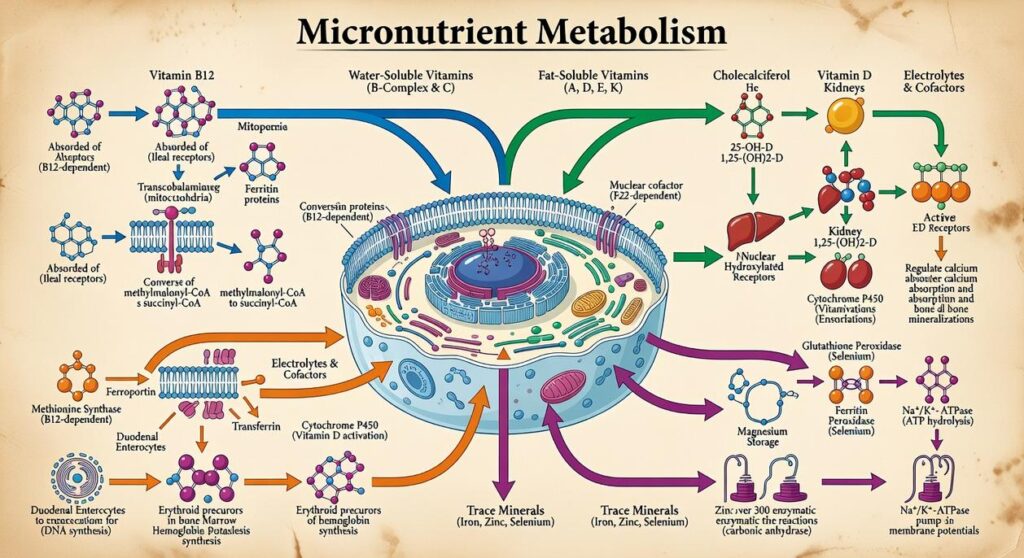
Beyond Calories: Why Micronutrients Dictate Performance
You can hit your macros perfectly and still feel flat. Why? Because calories fuel the engine, but micronutrients run the wiring.
Electrolytes (The Spark Plugs)
Sodium, potassium, and magnesium regulate hydration, nerve impulses, and muscle contractions. In simple terms, electrolytes are charged minerals that help your muscles “fire.” Lose too much through sweat and you risk cramps, headaches, or that mid-workout fade (yes, the kind that hits right before your last set). The American College of Sports Medicine notes sodium losses can significantly impair performance during prolonged exercise. Recommendation: add electrolytes to long sessions and prioritize consistent daily hydration, not just pre-workout chugging. For practical guidance, review hydration strategies to maximize focus and stamina.
Iron & B-Vitamins (The Oxygen Movers)
Iron supports hemoglobin, the protein that carries oxygen in red blood cells. B-vitamins help convert food into usable energy. Low levels can reduce VO2 max and cause persistent fatigue (even if your macronutrient ratio for performance is dialed in). If you feel unusually winded, test ferritin and B12 levels before blaming your training plan.
Antioxidants (The Recovery Accelerators)
Vitamins C and E combat oxidative stress—cell damage triggered by intense exercise. Colorful fruits and vegetables supply these compounds, helping reduce inflammation and speed recovery (think nature’s repair crew). Recommendation: aim for three different produce colors daily to cover your bases.
Strategic Fueling: A Timeline for Peak Performance

Great workouts don’t start when you lace up your shoes. They start on your plate.
The Pre-Workout Window (2–3 Hours Out) is where you build your energy base. Choose complex carbohydrates (slow-digesting carbs that provide steady energy) with moderate protein. Think grilled chicken with sweet potato or oatmeal with Greek yogurt. This combination tops off glycogen—your muscles’ stored fuel—without sitting heavy in your stomach.
Some argue fasted training boosts fat burn. While that may work for low-intensity sessions, high-output training demands available fuel. If performance is your goal, eat. Aim for a balanced macronutrient ratio for performance that prioritizes carbohydrates before intense sessions.
The Intra-Workout Refuel (Sessions Over 90 Minutes) keeps your engine running. During prolonged exertion, blood glucose drops, leading to fatigue and reduced focus. Easily digestible carbs—like sports drinks, gels, or even a banana—help maintain output. (Yes, this is why marathoners grab those neon-colored cups mid-race.)
Recommendations for long sessions:
- Sip 30–60g carbohydrates per hour
- Pair with electrolytes to prevent cramping
- Choose options you’ve tested in training, not on event day
The Post-Workout Anabolic Window (30–60 Minutes After) is prime recovery time. Your muscles are primed to absorb nutrients. Combine fast-acting carbs with high-quality protein, such as a whey shake and banana, to replenish glycogen and stimulate muscle repair (the rebuilding process that makes you stronger).
Pro tip: If you’re not hungry post-workout, blend your recovery meal—liquid nutrition digests quickly and feels lighter.
Fuel with intention. Performance follows.
The Overlooked Essential: Hydration’s Impact on Strength and Stamina
Lose just 2% of your body weight through dehydration and performance drops fast. Research in the Journal of Athletic Training shows this level of fluid loss significantly reduces power output, endurance, and cognitive function. That means slower lifts, shorter runs, and foggy decision‑making (yes, even counting reps feels harder).
Baseline formula:
- Body weight (lbs) × 0.5–0.7 = ounces per day
- Add 12–16 oz per 30 minutes of intense training
Monitor hydration by:
- Pale‑yellow urine color
- Stable morning body weight
- Consistent energy levels
Even the best macronutrient ratio for performance fails without adequate fluids.
Optimal nutrition isn’t restrictive dieting; it’s strategic fueling. When your eating is random, your performance is random, too. Research shows athletes who align calorie intake with training demands improve recovery by up to 20% (Journal of the International Society of Sports Nutrition). In other words, structure matters. By balancing carbohydrates, protein, and fats into a macronutrient ratio for performance, you fuel effort and repair. Moreover, timing micronutrients and post-workout protein supports muscle synthesis, which peaks within hours after training. So, start today: optimize your next recovery meal with 20–40g protein and quality carbs. Small shifts, measurable gains. Consistency compounds results.
Understanding how to balance your macronutrients can enhance not only your physical performance but also your mental resilience, complementing insights from our exploration of the science behind the mind-body connection and everyday health – for more details, check out our The Science Behind Mind-Body Connection and Everyday Health.
Build Strength, Fuel Energy, Perform Better
You came here to understand how to build a stronger foundation with smarter nutrition, better energy management, and more effective strength conditioning. Now you have the blueprint.
When your workouts feel inconsistent, your energy crashes mid-day, or your results stall despite your effort, the issue usually isn’t motivation — it’s strategy. Dialing in your training structure, recovery habits, and especially your macronutrient ratio for performance is what separates spinning your wheels from making measurable progress.
The good news? You don’t need extreme diets or punishing routines. You need a system that supports strength, sustained energy, and long-term health.
If you’re ready to stop guessing and start seeing real results, take the next step now. Get expert-backed guidance designed to fix low energy, plateaus, and inconsistent progress — and follow a proven approach trusted by thousands striving to train smarter and feel stronger. Start today and turn your daily effort into lasting performance gains.
 James Mathisagary has opinions about daily health routine tips. Informed ones, backed by real experience — but opinions nonetheless, and they doesn't try to disguise them as neutral observation. They thinks a lot of what gets written about Daily Health Routine Tips, Fitness Foundations and Essentials, Hydo Strength Conditioning Techniques is either too cautious to be useful or too confident to be credible, and they's work tends to sit deliberately in the space between those two failure modes.
Reading James's pieces, you get the sense of someone who has thought about this stuff seriously and arrived at actual conclusions — not just collected a range of perspectives and declined to pick one. That can be uncomfortable when they lands on something you disagree with. It's also why the writing is worth engaging with. James isn't interested in telling people what they want to hear. They is interested in telling them what they actually thinks, with enough reasoning behind it that you can push back if you want to. That kind of intellectual honesty is rarer than it should be.
What James is best at is the moment when a familiar topic reveals something unexpected — when the conventional wisdom turns out to be slightly off, or when a small shift in framing changes everything. They finds those moments consistently, which is why they's work tends to generate real discussion rather than just passive agreement.
James Mathisagary has opinions about daily health routine tips. Informed ones, backed by real experience — but opinions nonetheless, and they doesn't try to disguise them as neutral observation. They thinks a lot of what gets written about Daily Health Routine Tips, Fitness Foundations and Essentials, Hydo Strength Conditioning Techniques is either too cautious to be useful or too confident to be credible, and they's work tends to sit deliberately in the space between those two failure modes.
Reading James's pieces, you get the sense of someone who has thought about this stuff seriously and arrived at actual conclusions — not just collected a range of perspectives and declined to pick one. That can be uncomfortable when they lands on something you disagree with. It's also why the writing is worth engaging with. James isn't interested in telling people what they want to hear. They is interested in telling them what they actually thinks, with enough reasoning behind it that you can push back if you want to. That kind of intellectual honesty is rarer than it should be.
What James is best at is the moment when a familiar topic reveals something unexpected — when the conventional wisdom turns out to be slightly off, or when a small shift in framing changes everything. They finds those moments consistently, which is why they's work tends to generate real discussion rather than just passive agreement.